
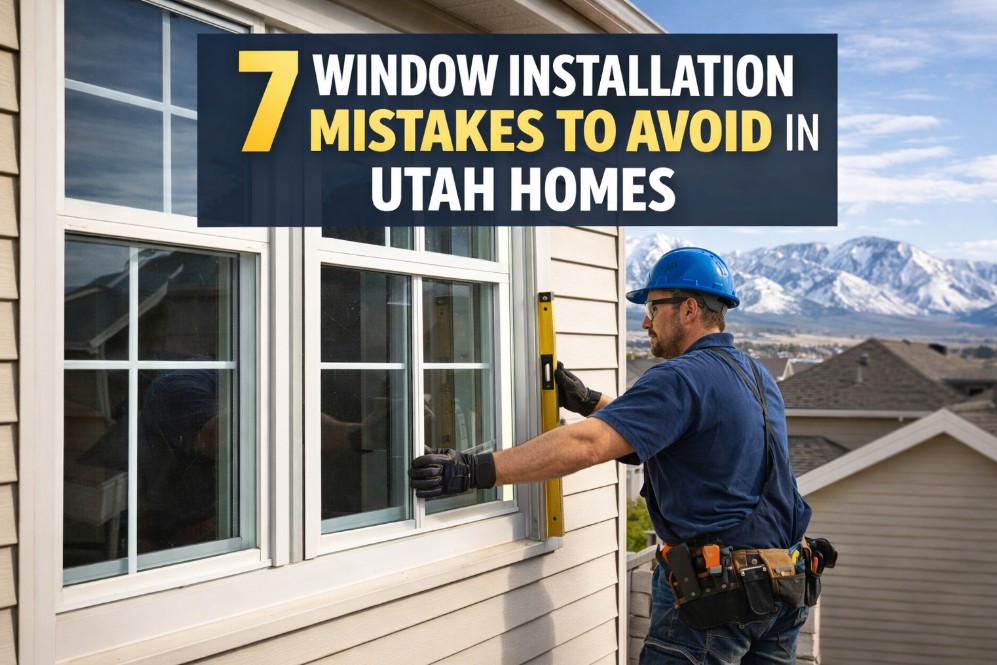
Window Installation Mistakes to Avoid in Utah Homes
Improper window installation leads to energy loss, water damage, and structural issues, costing thousands in repairs. The biggest window installation mistakes to avoid in Utah are poor flashing, wrong measurements, skimpy insulation, and overlooking our harsh climate. These problems wreck your home’s efficiency and void warranties—reason enough to hire a pro.
Why Bad Installation Hits Utah Homes Harder
Utah weather doesn’t mess around. We swing from 100-degree summers to sub-zero winters, and your windows take the brunt of it. A botched install isn’t just an energy bill problem—it opens doors for moisture to rot your framing, ruin insulation, and grow mold.
Here’s what catches most homeowners off guard: tiny mistakes snowball fast. That window looks fine today? Give it one season of Utah’s temperature extremes, and you’re dealing with drafts, condensation, or worse. That’s exactly why we always recommend professional window installation services for any project.
Think about the pressure your windows face. Indoor air at 70 degrees, outdoor air at -10 degrees—that 80-degree difference makes everything expand and contract constantly. Skip proper techniques, and those seals fail way too soon.
Mistake #1 – Getting Rough Opening Measurements Wrong
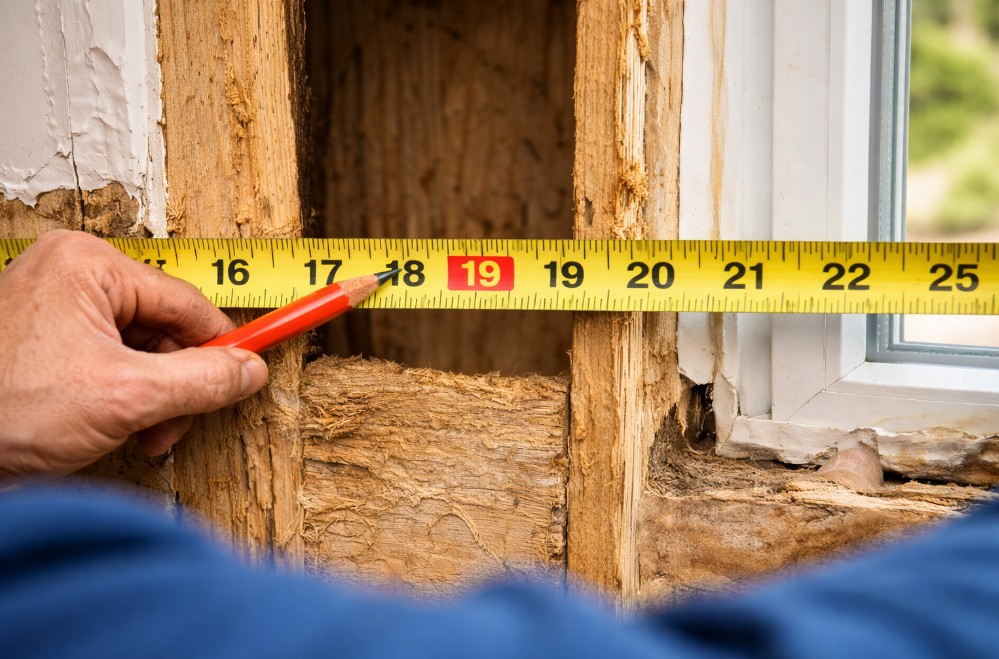
Mess up your measurements, and everything else falls apart. Windows need about ½ inch of breathing room on each side for shims, insulation, and the seasonal movement Utah’s climate demands.
Here’s what goes sideways with bad measurements:
- Too-tight windows can’t be leveled or insulated correctly
- Oversized gaps turn into air-leak nightmares
- Your home settling creates frame stress and operational headaches
- Say goodbye to your manufacturer’s warranty
Most folks don’t know this, but the size stamped on your window isn’t what you cut. Manufacturers list nominal dimensions—your actual rough opening needs to be bigger to make everything work.
We measure at several spots because walls rarely run perfectly square. Old Salt Lake homes? They’ve settled over decades, which means adjustments are practically guaranteed. Whether you’re putting in double-hung windows, casement windows, or slider windows, precision matters more than you’d think.
The International Residential Code spells out exactly why proper rough opening prep matters for both structure and longevity.
Mistake #2 – Skipping Flashing or Doing It Wrong
Flashing stops water from getting where it shouldn’t. This thin metal or specialized tape redirects moisture away from openings and keeps it out of your walls.
Your flashing system needs these parts:
- Still pan running under the window and up the sides
- Side pieces tied into your weather barrier
- Head flashing covering the top
- Correct layering so water always flows out
We see too many jobs where flashing gets slapped on at the last minute, with whatever materials are cheap. Utah’s wild temperature swings need quality, flexible flashing that holds up year after year.
The U.S. Department of Energy calls out flashing as your number-one defense against moisture damage, which kills more window systems than anything else.
Here’s the trick most people miss: flashing layers like roof shingles. Each piece overlaps the one below, creating a path that sends water down and out. Mess up that order, and you’ve built a funnel straight into your walls.
Don’t Let Utah’s Dry Climate Fool You
Some installers cut corners on flashing because “Utah’s so dry.” That’s asking for trouble. Sure, we’re not Seattle, but we deal with:
- Spring snowmelt pouring down exterior walls
- Summer thunderstorms with sideways rain
- Freeze-thaw cycles are beating on every seal
Good installation means comprehensive flashing, no matter what the weather looks like today. You’re building for 30 years, not three months.
Mistake #3 – Cheaping Out on Air Sealing and Insulation
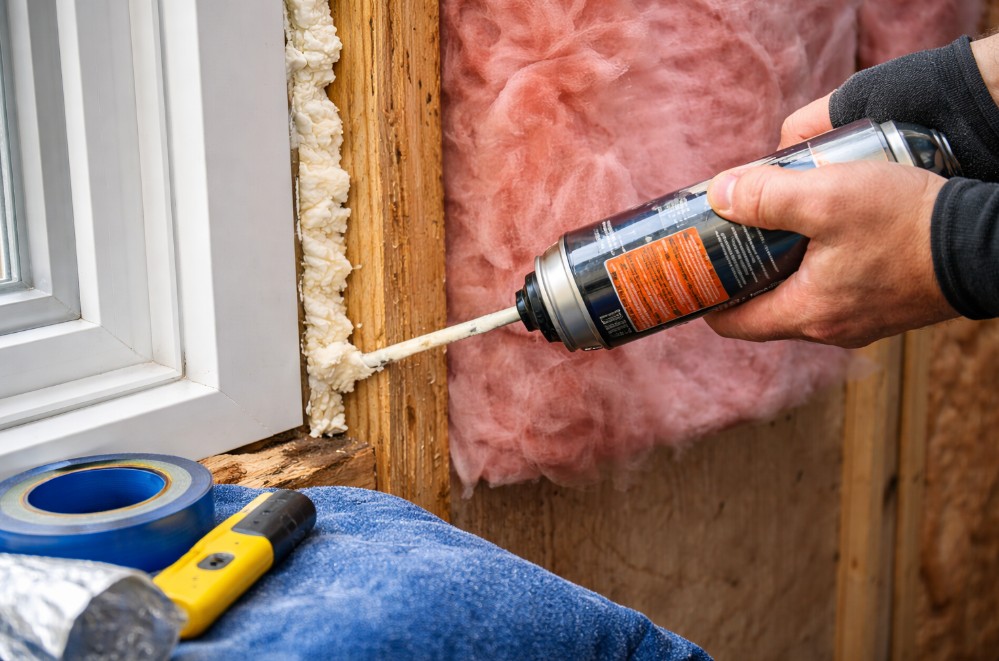
That gap between your window frame and the rough opening? It needs proper insulation and sealing, or it becomes your biggest energy leak.
Watch out for these air sealing blunders:
- Regular expanding foam that bows your frames
- Gaps left between insulation and framing
- Mashing fiberglass too tightly (kills its R-value)
- Forgetting that inside and outside need separate seals
Hundreds of jobs have taught us that insulation needs finesse. Your window has to open and close smoothly while the space around it stops air cold.
Low-expansion foam made for windows is non-negotiable. Regular stuff creates too much pressure and warps frames until they won’t work right. The ENERGY STAR program lays out how to seal properly without compromising anything.
Salt Lake’s temperature swings show up fast on energy bills when sealing fails. Cold drafts in January, baking heat in July—those are dead giveaways that gaps weren’t handled correctly. Even the best energy-efficient windows can’t overcome sloppy installation.
Mistake #4 – Rushing the Shimming and Leveling
Shims keep your window operating smoothly and sealing properly for years. They fill that critical gap, let you level precisely, and support the unit’s weight.
Shimming done right means:
- Shims at every corner plus every 12 inches along the sides
- Checking level multiple ways before locking anything down
- Pairing shims from opposite directions for solid support
- Never cranking fasteners so tight that they crush the shims
Rush this step, and you’ll pay for it. A window off by just ⅛ inch binds up, sticks, or won’t lock. We catch this constantly during inspections.
Poor shimming spreads stress unevenly across the frame. Seals fail faster, air leaks through, and moving parts grind instead of gliding. Hardware breaks down way before it should.
Good installers check the level constantly because things shift as you tighten screws and foam expands. Multiple checks guarantee the finished product stays true.
Mistake #5 – Wrong Fasteners or Fastening Methods
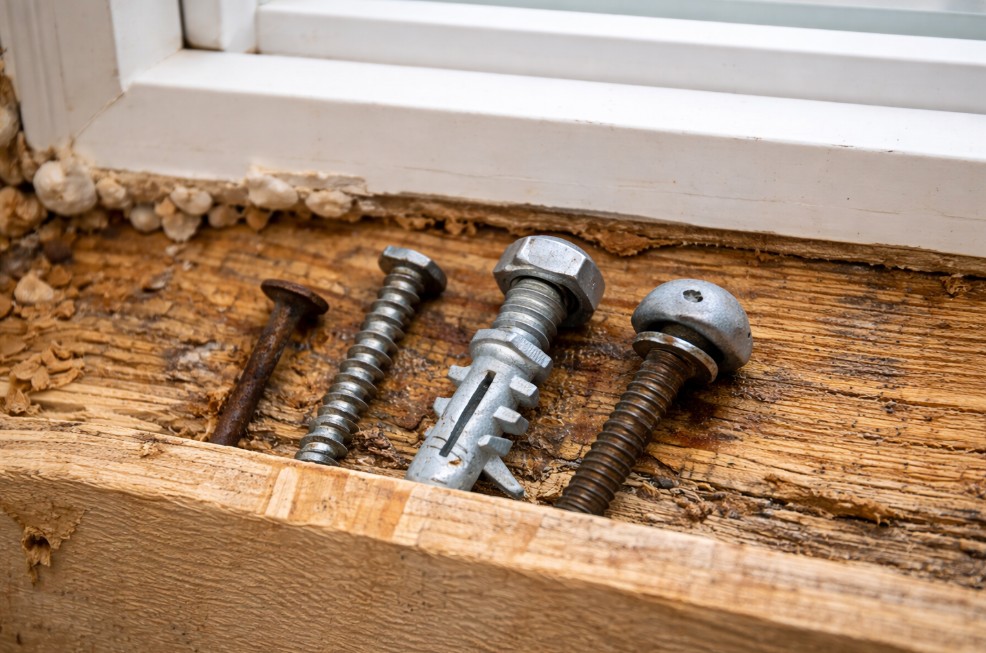
How you attach windows to your house determines structural strength and seal longevity. This gets overlooked constantly, and it’s costly.
Fastening essentials:
- Match fastener type to your framing (wood, masonry, vinyl siding all differ)
- Proper spacing prevents warping
- Penetration depth matters—hit structural framing, not just sheathing
- Over-tightening breaks seals and bends frames
Problems from bad fastening show up later. Windows sag, leak air, or worse—they pull loose during windstorms.
Utah codes follow the International Building Code, which sets minimum fastening based on wind loads. Salt Lake County gets occasional strong winds that test poorly secured windows hard.
Use corrosion-resistant fasteners long enough to sink 1½ inches into real framing. Nail through shims to spread the load and keep frames from distorting.
The Over-Tightening Problem
Sounds backward, but cranking fasteners too tight causes just as much damage as loose ones. Too much torque:
- Bows vinyl frames and breaks their seals
- Cracks wood frames under stress
- Crushes gaskets past their limits
- Stops natural thermal expansion
Smart installers make fasteners snug without compressing anything. Frames need to keep their intended shape to function properly.
Mistake #6 – Treating Exterior Caulking Like an Afterthought
The seal between your window and siding is your final weather barrier. Lots of installers treat caulking as decoration—it’s way more important than that.
Exterior sealing requires:
- Quality paintable sealant rated for outdoors
- Continuous beads without gaps
- Proper concave profile to shed water
- Never sealing the bottom exterior—that’s your drain path
Blocking weep systems ranks high on our list of common errors. Modern windows have weep holes or channels that must stay open. Seal those, and water gets trapped inside, where it rots everything.
Caulk quality matters enormously for longevity. Cheap acrylic stuff cracks after one Utah winter. We use elastomeric sealants that stay flexible from -40°F to 180°F through every season.
Mistake #7 – Ignoring Interior Trim and Vapor Barriers
Interior finishing does more than look nice—it manages moisture and maximizes efficiency. The inside of your window assembly has to stop humid indoor air from hitting cold surfaces where it condenses.
Interior finishing includes:
- Vapor barrier sealant around the inside perimeter
- Trim fitted tight against walls
- Paint or stain protecting wood parts
- Proper ventilation controls indoor humidity
Salt Lake homes with older furnaces often have condensation issues traced straight back to incomplete interior sealing. Warm air sneaks past the vapor barrier and condenses on cold frames or inside walls.
Good work means a continuous interior air seal that’s separate from your exterior weather barrier. They do different jobs with different materials. The Environmental Protection Agency offers solid guidance on moisture management for window assemblies.
When You Absolutely Need a Professional
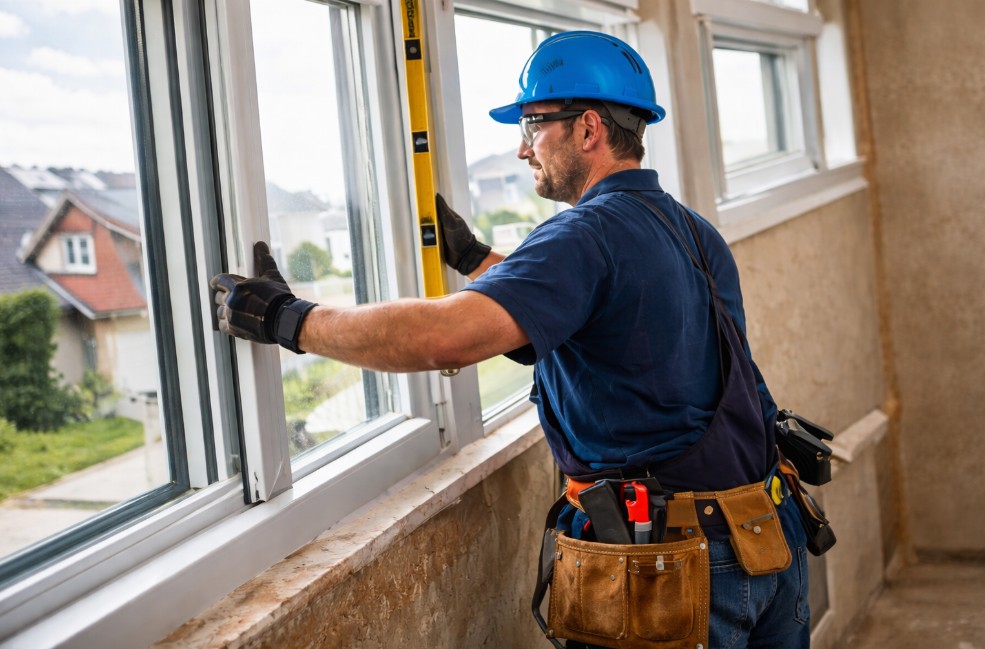
Window work demands specific knowledge, specialized tools, and real experience. Professional help isn’t optional—it’s required for warranty protection and long-term results.
Call a pro for:
- Any structural changes to openings
- Load-bearing wall work
- Stucco or masonry installations
- Multi-story jobs needing scaffolding
- Replacement windows with damaged rough openings
- Historic homes with unusual framing
- Large specialty units like bay windows or bow windows
Installation mistakes cost way more to fix than hiring pros costs upfront. Water damage from bad flashing means tearing into walls for major reconstruction. Wrong-sized windows need complete removal and reframing.
Professional installers bring liability insurance, provide warranties, and know local codes inside out. Those protections matter when something goes wrong. At WINDOW & DOOR SALT LAKE, UT, our teams ensure everything meets code while protecting your investment.
For professional window installation in Salt Lake, Utah, experienced installers guarantee your windows work as designed. Whether you need vinyl windows, picture windows, or awning windows, proper techniques form the foundation of long-term performance.
What Makes Utah Installation Different
Utah’s climate creates unique demands that generic approaches can’t handle. Extreme temperatures, brutal UV, and elevation all affect how windows perform.
Wild Temperature Swings
Salt Lake Valley sees 40-50°F shifts between daytime and nighttime during spring and fall. This constant expansion and contraction hammers improperly installed windows.
Smart installation accounts for thermal movement:
- Proper clearance in rough openings
- Flexible sealants handle movement
- Moderate-temperature installation when possible
- Avoiding over-constraint that blocks expansion
Intense UV Exposure
Utah’s elevation delivers 15-20% more UV than sea level. That accelerates the breakdown of sealants, gaskets, and exterior finishes. Installation materials need high-UV ratings.
Heavy Heating and Cooling Demands
With roughly 6,000 heating degree days and 1,000 cooling degree days, Salt Lake homes face serious energy costs. Proper installation directly cuts these expenses through better air sealing and thermal performance.
Taking Care of Windows After Installation
Even a perfect installation needs periodic maintenance for peak performance. Understanding post-install care protects your investment.
Check annually:
- Exterior caulking for cracks or gaps
- Weep holes to keep drainage clear
- Moving parts for lubrication needs
- Interior surfaces for condensation or drafts
- Seals and weatherstripping for damage
Spring and fall cleaning present ideal times for window inspection. Catch small issues then, before they grow into expensive repairs.
Minor problems like cracked caulk or clogged weep holes turn into major headaches when ignored. Fix them immediately to prevent water intrusion and extend window life.
Conclusion
Avoiding these critical errors takes careful attention to detail, quality materials, and techniques matched to Utah’s demanding climate. From accurate rough opening prep through complete flashing and air sealing, each step builds on the last to create tight, efficient assemblies.
Professional work protects your investment and delivers decades of reliable performance. Fixing mistakes later costs far more than doing it right the first time.
Ready for windows that actually perform as designed? Call WINDOW & DOOR SALT LAKE, UT at 385-483-2061 or contact our team for expert window installation services throughout Salt Lake, Utah. We’ll inspect your openings, walk through your options, and guarantee proper installation, protecting your home and investment. We also handle comprehensive door installation services and door replacement for complete home improvement projects.
Frequently Asked Questions
How long does professional window installation take?
Count on 1-2 hours per window, depending on opening complexity and needed modifications. Full-frame replacements removing interior and exterior trim take longer than insert replacements. That timeframe covers proper flashing, insulation, sealing, and interior finishing—none of which should be rushed.
Can I install windows in winter in Utah?
Yes, with some limitations. Professionals can work down to about 20°F using cold-weather sealants and foam designed for low temperatures. Extreme cold prevents proper flashing adhesion and makes some sealants unworkable. Late fall and early spring offer the best conditions here.
What’s the difference between insert and full-frame replacement windows?
Insert replacements fit into your existing frame after pulling the sash, while full-frame replacement tears out the entire unit, including the frame. Full-frame becomes necessary when frames are damaged, rotted, or you’re changing sizes. Insert works when existing frames are solid, but slightly reduces the glass area. Installation requirements differ significantly—full-frame demands more comprehensive flashing and air sealing. Learn more about options through window replacement services matched to your home’s needs.
How do I know if my window installation was done correctly?
Well-installed windows operate smoothly without binding or sticking, show zero visible gaps around frames, and have no detectable drafts when you hold your hand near edges. Exterior caulking runs continuously without cracks, weep holes stay visible and clear, and interior trim fits tight to walls. Condensation between panes, air leakage, or operation problems within the first year mean you need to call your installer about warranty coverage.
Do installation mistakes void manufacturer warranties?
Absolutely. Most warranties explicitly require professional installation following the manufacturer’s specs. Improper work voids coverage for seal failure, frame damage, and operational issues. That’s exactly why working with experienced installers protects both your window investment and warranty coverage. Keep all installation documentation and warranty papers.
What’s the most expensive mistake to fix?
Water damage from botched flashing typically costs the most because it affects structural framing, insulation, and interior finishes way beyond just the window. By the time damage shows up inside your home, extensive rot and mold have often spread through wall cavities. Fixing it means removing siding or interior surfaces, replacing framing, reinstalling windows properly, and restoring everything, frequently running several thousand dollars per window.